Thursday, December 16, 2010

Doctors Use Acupuncture as Newest Battlefield Tool

Doctors Use Acupuncture as Newest Battlefield Tool

By Cheryl Pellerin
American Forces Press Service

WASHINGTON, Dec. 10, 2010 – J.D. Nichols, a retired Navy flight officer and cryptologist, limped into the Air Force Acupuncture Center at Joint Base Andrews in Maryland early yesterday morning, leaning heavily on a cane.

Click photo for screen-resolution image
John F. Bilsky Sr. receives acupuncture for pain from a military doctor during a workshop at the Air Force Acupuncture Center at Joint Base Andrews in Maryland, Dec. 9, 2010. The purpose of the class was to teach battlefield acupuncture to military physicians from Walter Reed Army Medical Center. DOD photo by Cheryl Pellerin

(Click photo for screen-resolution image);high-resolution image available.
A couple of hours later, moving easily without the cane and with the ends of tiny gold needles glittering in both ears, he waved goodbye to the military doctors who had reduced his pain using a technique called battlefield acupuncture.

The doctors, from Walter Reed Army Medical Center, were part of a workshop on the technique developed by Dr. Richard Niemtzow, a retired Air Force colonel who practiced medicine as a radiation oncologist before he studied acupuncture in 1994.

Nichols was one of four patients who volunteered for treatment at the 779th Medical Group’s acupuncture clinic, where Niemtzow and Dr. Stephen Burns, a retired Air Force colonel and full-time Air Force acupuncturist, train military doctors and treat patients.

“I walked yesterday and I barely made it home with the cane. That’s how much pain there was,” Nichols told the doctors after his treatment. “Now I’m walking without pain, as though I didn’t have the problem.”

“You said you felt like you could walk a mile,” Niemtzow said. “Would you have said that this morning when you first came here?”

“I didn’t think I was going to make it to the car,” Nichols said.

Niemtzow estimates that he and Burns have trained 60 physicians so far this year at Andrews and at Air Force and Army bases in Germany, Korea, Washington, Florida and Alaska.

“The Air Force Acupuncture Center is the first facility of its kind in DOD ever,” Air Force Col. (Dr.) John Baxter said. “It is a full-time acupuncture facility, and not only is it here to treat patients, it’s here to teach other providers and to do research.”

Baxter is director of the Pentagon Flight Medicine Clinic and a credentialed acupuncturist.

Acupuncture is being used as a treatment everywhere in the Defense Department, “but the Air Force led the way with two formal training programs of 20 physicians each,” Baxter said. “The Navy has one training program with 20 physicians and efforts are underway to have another tri-service training program.”

Healers in China and other Asian countries have practiced acupuncture for thousands of years. According to traditional Chinese medicine, disease is due to an internal imbalance of the opposing forces of yin and yang. Such an imbalance is believed to lead to a blockage in the flow of qi [pronounced chi], the vital life energy that flows along pathways called meridians, the philosophy says.

Meridians connect all systems in the body through a web-like matrix of at least 2,000 acupuncture points. Acupuncture is believed to unblock that vital energy.

Treating patients involves penetrating the skin with thin, solid metallic needles that are manipulated by the hands or by electrical stimulation.

The practice is controversial among some in the United States, but the National Institutes of Health recognizes acupuncture as evidence-based therapy that works for many kinds of medical conditions, Baxter said.

Scientists are studying the efficacy of acupuncture for a range of conditions, according to the National Center for Complementary and Alternative Medicine in Bethesda, Md.

According to the 2007 National Health Interview Survey, which included a survey of complementary and alternative medicine use by Americans, 3.1 million U.S. adults and 150,000 children had used acupuncture in the previous year.

And in June, the Army surgeon general released a report that recommended “a holistic, patient-centered approach” to pain management that uses all kinds of therapy, from conventional medicine to “complementary and alternative modes such as acupuncture, meditation, biofeedback, yoga and others.”

In traditional acupuncture, practitioners use all 20 or so meridians. For battlefield acupuncture, Niemtzow uses only five points on each ear. Small, 1-millimeter gold or stainless steel needles are inserted and stay in place until they fall out or the patient removes them several days later.

The positive effects, Burns said, “last two hours, two days, two weeks, two months or two years -- we’ve seen everything.”

Most patients receive three to four treatments over several months and come to walk-in acupuncture clinics, held on Tuesdays and Thursdays, if their pain returns.

“Doctor Niemtzow developed the technique over many years of working with patients,” Baxter said.

“He localized five points and prioritized them into a protocol that any provider can use, without knowing anything else, like on a battlefield when you’ve got someone in serious pain,” he added. “It will take you five minutes or less and chances are you’re going to drastically reduce that patient’s pain.”

Before the workshop began, Niemtzow said, “All the patients we see at the U.S. Air Force Acupuncture Center have not responded well to Western medicine.”

Many patients “have complicated medical problems and traditional medicine hasn’t helped them. They’ve been to the orthopedic surgeon, to traditional pain management clinics, to neurologists and dermatologists and they’ve taken drugs for pain relief,” he said.

“The majority of patients come to our clinic seeking relief from pain. The pain medication they’re taking has not been satisfactory or they’ve not responded well,” Niemtzow said.

“For many patients it is a last resort, but our success rate is very high here, which is very rewarding for the patient and also for myself and Doctor Burns,” he added.

Air Force Lt. Col. (Dr.) Christian Hanley, also a credentialed acupuncturist, said acupuncture hasn’t replaced traditional medicine, but it’s a very good adjunct.

“This is a great gift we’ve been given,” he said, “so we take it and use it.”

During the workshop, the doctors treated three more patients, all of whom left the clinic with less pain than they arrived with.

“Nowhere in my experience of medicine in all these years have we had so many people walking away happy right from our interaction,” Air Force Lt. Col. (Dr.) Dan Balog said.

Balog, who practices psychiatry and family medicine at the 79th Medical Group at Andrews, has used acupuncture on patients he treats for anxiety and depression.

“It’s pretty rewarding from the clinical side to see this,” he said, adding that acupuncture is also an avenue for patients who already take a lot of medications.

With multiple medications, Balog said, “there’s a lot of collateral damage that we don’t always anticipate.”

“There are people who still doubt this and I think they always will,” Niemtzow said, “but for us who are in the clinic every day, we see people suffering from the war and from this or that and there’s nothing left to offer them. And we can put 50-cent needles in an individual’s ear, and they look at you and smile and say, ‘my God, I feel better!”

“The question that comes to my mind is,” Baxter said, “if you can make the majority of patients better during their clinic visit without medicines, then why are you still treating patients the old way?

“We certainly would never go back [to practicing without acupuncture],” he said, “and I think the future for acupuncture will be bright.”


http://www.defense.gov/news/newsarticle.aspx?id=62053
www.awcsandiego.com

Tuesday, December 14, 2010

Acupuncture May Be Effective for Amblyopia in Some Older Children


Acupuncture May Be Effective for Amblyopia in Some Older Children
Laurie Barclay, MD

December 14, 2010 — Acupuncture could potentially become an alternative to patching for treating some older children with amblyopia, according to the results of a single-center, randomized controlled trial published online December 13 in the Archives of Ophthalmology.

"A more effective and convenient alternative treatment for anisometropic amblyopia is required, especially for older children," write Jianhao Zhao, MD, from Joint Shantou International Eye Center of Shantou University and Chinese University of Hong Kong in Shantou, China, and colleagues.

"Acupuncture...has been used for treating ophthalmic disorders such as dry eye, myopia, and amblyopia. In recent years, the use of functional magnetic resonance imaging has demonstrated a correlation between vision-related acupoint stimulation and visual cortical activation, suggesting a possible basis for the use of acupuncture in treating amblyopia."

The study goal was to compare the efficacy of daily patching for 2 hours with that of acupuncture in treating anisometropic amblyopia. Participants were 88 children, aged 7 to 12 years, with an amblyopic eye, who had worn optimal eyeglasses for at least 16 weeks and had achieved a best spectacle-corrected visual acuity (BSCVA) of 0.3 to 0.8 logMAR at baseline. Children were randomly assigned to receive patching of the nonamblyopic eye for 2 hours daily or 5 sessions of acupuncture weekly. In addition, all participants received constant optical correction, 1 hour of near-vision activities daily, and follow-up at weeks 5, 10, 15, and 25. The primary study endpoint was BSCVA in the amblyopic eye at 15 weeks.

In the patching group, mean BSCVA of the amblyopic eye improved by 1.83 lines from baseline to 15 weeks compared with 2.27 lines in the acupuncture group. These improvements met the definition of equivalence (difference within 1 line) after baseline adjustment, with mean between-group difference in BSCVA of 0.049 logMAR (95% confidence interval, .005 - .092; P = .03).

Improvement in BSCVA by 2 lines or more occurred in 28 eyes (66.7%) in the patching group and in 31 eyes (75.6%) in the acupuncture group, and resolution of amblyopia occurred in 7 (16.7%) and 17 (41.5%) eyes, respectively. Tolerability and compliance were good for both treatments, with no serious adverse effects in either group.

"Acupuncture produced equivalent treatment effect for anisometropic amblyopia, compared with patching, and was statistically superior," the study authors write. "Further studies are warranted to investigate its value in the treatment of amblyopia."

Limitations of this study include the possibility that some of the observed treatment effect may have resulted from continued optical correction, and the inability to compare different durations of patching or use of different acupoints.

"Although the treatment effect of acupuncture appears promising, the mechanism underlying its success as a treatment for amblyopia remains unclear," the study authors conclude. "Acupuncture at vision-related acupoints may modulate the activity of the visual cortex. Moreover, acupuncture has been shown to be effective in increasing blood flow to the cerebral and ocular vasculatures (including the choroid), stimulating the expression of retinal nerve growth factors and leading to metabolic changes in the central nervous system."

The Mr. Lai Seung Hung and Mrs. Lai Chan Pui Ngong Eye Fund and the Edith C. Blum Foundation supported this study. Several of the study authors have filed with the US Patent and Trademark Office a provisional patent application for the stimulation of specific acupuncture points for the improvement of vision.

Arch Ophthalmol. Published online December 13, 2010.

http://www.medscape.com/viewarticle/734197
www.awcsandiego.com

Thursday, December 9, 2010

Help Us to Help the San Diego Food Bank!


Help Us to Help the San Diego Food Bank!


This year we are holding a food drive to benefit the San Diego Food Bank, come out to either clinic and help us make it a success! For every donation we will repay your generosity with a gift from the clinic. You may pick from a 25% off massage coupon, a $250 gift certificate for a loved one and a $1500 corporate wellness package you workplace, church or community organization.


San Diego Food Bank - Hunger Fact Sheet 2010


Hunger and poverty in San Diego County:

Of San Diego County’s 3.1 million residents, 483,000 people live at or near the federal poverty level.* 273,000 are children.* These individuals, the majority of whom are children, face “food insecurity” which means that little or no food is available at home, and they will face times when they will not know where their next meal will come from. (*U.S. Census Bureau. American Community Survey, 2008. Compiled by SANDAG, January 2010.)


About the San Diego Food Bank:

The San Diego Food Bank feeds over 342,000 people per month in partnership with over 350 nonprofit community partners including: food pantries, soup kitchens, shelters, low-income daycare centers, senior centers, churches, schools, and day centers for the elderly and disabled.

The Food Bank’s nonprofit partners collect food from its 72,000 sq. ft. warehouse in Miramar and distribute the food directly to people in need in their local communities. By acting as a central distribution point and through its own direct distributions, the Food Bank and its nonprofit partners provide food to communities throughout the county’s 4,200 square mile radius.

In the fiscal year 2009 - 2010, the Food Bank distributed 15.3 million pounds of food – the equivalent of 12 million meals.


Demand for food is soaring:

The prolonged economic downturn has deeply affected San Diego County. With an unemployment rate over 10%, continuing job layoffs, home foreclosures and high gas prices tens of thousands of additional families and fixed-income seniors are turning to the Food Bank to help put food on the table.

As the barometer of the county’s economic health, the Food Bank’s distribution increases illustrate the impact of the economy on local families.

In 2008, the Food Bank fed 200,000 per month. This increased by 52% to 304,000 per month in 2009. In 2010, the Food Bank is feeding over 342,000 people per month.


How you can help:

There are many ways you can help the Food Bank.

Donate food – Host a food drive at your school, business or church, or donate at either of our clinic's locations and recieve a gift for your generosity;


Sorrento Valley

6370 Lusk Blvd. #F103, San Diego, CA. 92121


Mission Valley

2425 Camino Del Rio South #150, San Diego, CA. 92108


Donate time – The Food Bank relies on volunteers to sort and package tons of food everyday. Individuals and groups can volunteer at the Food Bank’s warehouse Tuesday through Saturday.

Donate money – Monetary donations help supplement the “lottery” of food drive donations. For every $1 donated the SDFB can provide three meals. $1 = 3 meals. Visit www.sandiegofoodbank.org/donate


Most needed food items:

canned meat & tuna canned soups canned fruits and vegetables canned beans, dry cereal, rice, mac & cheese and spaghetti.


Thank you and Happy Holidays to all of our friends and family!


www.awcsandiego.com


Tuesday, December 7, 2010

To The Point: Acupuncture: Its Growth In the United States & How It Works


To The Point: Acupuncture: Its Growth In the United States & How It Works

by John D. Convey, L.Ac.

Over the past year I’ve observed the growth of Acupuncture and Asian Medicine and have witnessed it’s upswing in popularity not only in my practice but also within the community of Complementary and Alternative Medicine (CAM). In turn, this surge in popularity has spread amongst patients in the United States who in the past relied mostly on Western Medicine but now actively seek answers within the field of Acupuncture and Asian Medicine for means and methods to achieve health, well-being and overall care.

One of my objectives is to provide a better understanding about the use of Acupuncture and Asian Medicine within our society. Being part of a larger movement and having my own practice, I think it beneficial to share my knowledge and to increase public awareness of the progress, promise, and benefits that both alternatives provide and come under the umbrella of a specific community and definition known as CAM.

Defining CAM – Complementary And Alternative Medicine. Because the field of alternative medicine is constantly evolving we’ll apply a basic definition to the concept and understanding of what CAM is. CAM is a group of diverse health and medical care systems, practices and products that are not generally considered to be part of conventional medicine. Conventional Medicine also known as Western Medicine is associated with and practiced by holders of M.D. and D.O. degrees and by associated health professionals, such as psychologists, registered nurses and physical therapists.

It is important to note that the boundaries between CAM and conventional medicine are not absolute. And should not be seen as a divide. As the practices of Complementary and Alternative Medicine continues to become more widely accepted and relied upon in the respective fields of medicine, the definition grows and the two systems continue to merge. So in brief, Complementary Medicine refers to the use of CAM together with conventional medicine.

As a health care professional, I must stress how important it is that this merger continues to grow and increase so patients can receive optimal care, relief and overall treatment for an existing or new condition.

An estimated 36% of U.S. adults use some form of complementary and alternative medicine (CAM), according to a survey by the National Center for Complementary and Alternative Medicine, a component of the National Institutes of Health. When megavitamin therapy and prayer, specifically for health reasons is included in the definition of CAM, the number of U.S. adults using some form of CAM in the past year rises to 62%. Among the common CAM practices identified by the survey were acupuncture, acupressure, herbal medicine, tai chi and Qi gong.

As these methods of practice continue to sync we, as healers are seeing a trend that supports the idea that the use of conventional medicine along side and stride with alternative medicine is helping an increasing number of patients deal with illness and injury. In some instances many of these illnesses and injuries have been hard to diagnose or may still be without specific conclusion consequently patients who would have gone without treatment have now found a path through CAM to seek care and relief.

Acupuncture and Asian Medicine is a bridge between that which is known conclusively through medical or conventional practice and that, which is not known but is acknowledged by the body and mind’s own intuitive nature. Making alternative practices not only important but also necessary.

A survey by the National Certification Commission for Acupuncture and Oriental Medicine found that approximately one in ten adults had received acupuncture at least one time and 60% said they would readily consider acupuncture as a potential treatment option. Nearly half (48%) of the individuals surveyed who had received acupuncture reported that they were extremely satisfied or very satisfied with their treatment. In addition, one in five (21%) of the total NCCAOM survey respondents reported that they had utilized some other form of Oriental medicine besides acupuncture, such as herbs or bodywork (e.g., shiatsu).

These studies and others like them clearly demonstrate that CAM therapies such as acupuncture and Oriental medicine are common practice in today’s health care system. They also support the need for consumers to be provided accurate and reliable information regarding their treatment options. It is again important to stress that as alternative practices grow the benefits of receiving such forms of treatment are providing patients with restored health.

My personal goal in writing this goes beyond providing a basic understanding of Alternative practices but to zero in on my specific specialty. Which is acupuncture and I believe acupuncture truly works. My passion is to ensure I provide Americans with and understanding that ultimately helps each individual understand how to access this practice and to receive the benefits that come from its use.

The human body is made up of over 300 billion cells. Every one of those cells is encoded with DNA that serves cells much like blueprints help orchestrate the building of a structure. Each cell has a unique “calling” or “function” to perform; some cells become smooth muscle tissue, while others become part of the nervous system, and so on. The process of the cell developing and operating as precise types allows all the cells to collectively work as one unit, in this case the all important human body. And more specifically – your body.

Let me use the model of modern technology as analogy to the human organism. Imagine that each of those 300 billion cells that make up the human anatomy are like the inner workings of tiny wireless lap top computers and smart phones. Communication with these devices is initiated through an energy that has been termed Wi-Fi. Wi-Fi has the ability to send and receive pieces of information, images, emails, etc. through thin air with not so much as a trace for the human senses to recognize. The cells that make up you have the same complex and compressive modality to transfer and receive bits of information called “Qi” (Chi) – it is the bodies Wi-Fi.

The Qi transmits information to and from the cell to acupuncture points throughout the body. Acupuncture points are like routers for your home or office that connect an entire system to one unit. Cellular antennas if you will, are hardwired into the circulatory and nervous systems much as our computer devices are plugged into the wall or travel via cable to and from the main server. Information is received and collected at these points and is then sent up to the server, in this case, the brain.

As a Doctor of acupuncture, I listen to the signals if you well – or the body’s communication and transmissions much like a technician reads the make-up of an electronic unit, to develop and devise a routine for repairing and healing the internal system.

This wireless communication is at the root of cellular organization, development, and growth. Its ability to thrive as a single unit collectively creates the network that completes the human body. It is through the body’s Wi-Fi system that acupuncture communicates then triggers, and stimulates a specific area in need of healing. Understanding the concept of wireless communication, or using technology as analogy, helps to explain how the human organism, like a computer in sync with its software, enjoys cooperation and communication among its specific parts and areas. Specific to the human body, each cell makes up the organization of the entire organism, which consequently makes communication and healing possible.

It is a magnificent system that should not be underestimated or ignored because of this very unique ability to communicate the needs of the human infrastructure, exterior structure and the complete body. Along with Complementary and Alternative medicine and well versed practitioners, you are your own best friend when it comes to the cycle of health.

Your body is there to tell you everything there is to know. And I will be here to help translate, communicate understanding and heal the body’s instant message.

http://www.outimpact.com/features/health-spirituality-wellness/point-well-taken/point-acupuncture-growth-united-states-works/

www.awcsandiego.com

Thursday, December 2, 2010

Acupuncture Changes How the Brain Processes, Responds to Pain


Acupuncture Changes How the Brain Processes, Responds to Pain


While plenty of people who receive acupuncture for the relief of chronic pain swear by its effectiveness, the western medical community has long remained skeptical of this increasingly popular alternative treatment. More and more research studies, however, are confirming the idea that acupuncture has its place in western medicine. The latest, a study out of the University Hospital in Essen, Germany, suggests that acupuncture transforms the way the brain processes pain.


Using functional magnetic resonance imaging (fMRI), researchers led by Dr. Nina Theysohn from the University Hospital's department of diagnostic and interventional radiology and neuroradiology were able to observe the areas of the brain that typically deal with pain perception and response. By studying 18 healthy volunteers who received an electronic pain stimulus to their left ankles, radiologists discovered that when acupuncture needles were placed on the right side of the subjects' bodies, the activation of the brain's pain processing areas was substantially reduced.


Theysohn's findings were presented at the Radiological Society of North America's annual meeting Tuesday in Chicago.


The results of this latest study, though small, are no surprise to Dr. Daniel Hsu, a doctor of acupuncture and herbal medicine at New York AcuHealth. "This is just one more in a growing number of studies that confirm acupuncture helps with chronic pain," he told AOL Health Wednesday morning.


Hsu says acupuncture addresses pain in two ways. It stimulates the body to produce naturally occurring pain-killing chemicals, and it interferes with pain signals to the brain. "With chronic pain, it's a good front line of defense," he adds. "With (nonsteroidal anti-inflammatory drugs), you have to take more and more for them to continue to work." He also points out that NSAIDs constrict blood vessels and can also be hard on the liver with continued use.


"When you receive acupuncture, you're not only decreasing pain but increasing blood flow," Hsu explains. "And because there are very few side effects, it can be tried in just about anyone."


Hsu says he receives many patients who have tried everything to stop chronic pain and seek out acupuncture as a last resort. Hsu says it varies from patient to patient how well acupuncture works. Some people see immediate relief after one treatment, while others have to receive continued therapy over a period of months.


http://www.aolhealth.com/2010/12/01/acupuncture-brain-process-pain/

Tuesday, November 30, 2010

Acupuncture for Chronic Fatigue Syndrome

Acupuncture for Chronic Fatigue Syndrome


By Adrienne Dwllwo

Research Brief

A small but growing body of evidence suggests that acupuncture may be an effective treatment for chronic fatigue syndrome.

A recent Chinese study showed that 2 treatments from Traditional Chinese Medicine (TCM) were effective -- acupuncture and Shenmai injection (which is composed of 2 common TCM herbs.) However, researchers say acupuncture was the far more effective treatment.

Specifically, researchers say the treatments made participants less fatigued and eased fatigue-related symptoms, such as brain function.

Last April, a separate study also out of China found that circadian rhythm (your internal "body clock") was abnormal in people with chronic fatigue syndrome, and that treatment with electroacupuncture was able to regulate the circadian rhythm and improve daytime cognitive function.

The term "electroacupuncture" has 2 different meanings. In TCM, it means using electricity in conjunction with needles to provide higher levels of stimulation. In the U.S., it's often used to describe treatment with low-voltage electricity instead of needles. The abstract didn't specify which form was used, and I can't read the article because it's in Chinese. However, since this was a Chinese study published in a Chinese journal, my assumption is that they used the TCM definition.

In Dec. 2009, another Chinese research group published a meta analysis of 28 published studies on acupuncture for chronic fatigue syndrome. It concluded that acupuncture does appear effective but that more high-quality studies need to be done before we know for sure.

If you're interested in trying acupuncture, it might help to print out the first two studies, linked above, so your acupuncturist knows which sites the researchers used.

http://chronicfatigue.about.com/b/2010/11/04/acupuncture-for-chronic-fatigue-syndrome.htm
www.awcsandiego.com

Tuesday, November 23, 2010

Fresh tips for surviving holiday stress


Fresh tips for surviving holiday stress

By Diane Suchetka

Old wounds reopen, new insults are hurled and the longest-running tradition is the family fight that started in 1962.

You can sidestep those land mines and come out at the other end of the holidays unscathed if you follow these experts' suggestions.

Start with the advice from Jeffrey Janata, a psychologist at University Hospitals Case Medical Center. He says to take steps before the holidays are in full swing. "Start by sitting down and thinking historically, what have the problems been?" he says. "Where does your stress come from? How do you avoid the pitfalls? Do your own inventory."

Having trouble with that? Talk to a friend who can finish this sentence, "Every year, I complain about ... " One or two things will pop out.

"Then you can create a strategy that makes sense for you," Janata says.

"You can only change your response to them."And there's a long list of strategies that can help. But always remember this: "In the end, you're not really going to change people," says Dr. Christine Alexander interim chairman of the Department of Family Medicine at MetroHealth Medical Center.

Become an anthropologist, or a comedian

Pretend your family is some strange tribe you've just discovered in the jungle, says Cleveland Clinic psychologist Michael McKee.

If anger or arguments develop, watch who instigates them, who responds and how.

turkey1.jpg

"Stand back and be the observer," McKee says. "Instead of reacting emotionally, you're really learning something about what the different patterns are."

Even better -- pretend you are in a "Seinfeld" episode.

After all, that's what Jerry was, a contemporary American anthropologist with a sense of humor.

A great deal of comedy is based on annoying events that occur when families get together, says James Overholser, a psychology professor at Case Western Reserve University.

"Remember how many 'Seinfeld' episodes were about that?" he says. "So step back and appreciate the humor. So much comedy is based on what happens in family situations."

Here's the best part of all. "You'll be even better prepared next year," says McKee, "because you'll know what to expect."

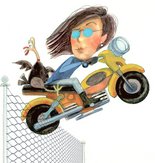
holidays-emotions-escape-plan-motorcycle.jpgView full size

Create an escape plan

If somebody is about to punch your hot button, hit "Eject" instead.

Changing the subject is a great way to do that, says family physician Alexander.

It works best, says the doctor, if you have topics lined up for all family members, things you know they like to talk about and don't lead to arguments: their gardens, the Browns, the kids, the books they're reading.

"Just find common ground you can engage in," Alexander says.

And if changing the subject doesn't work?

Leave.

"Say, 'I have to go to the bathroom' or 'I have to check on the kids' or 'I think I hear the kids calling.' "

Take a little time away, Alexander says, and by the time you get back, your antagonist will have moved on.

Read this book

Before you have to drag yourself through 15,739 seconds with the one relative who pushes all your buttons, pick up a copy of "The Four Agreements."

That's a recommendation from Deborah Ross, a Mayfield Heights therapist who gives presentations on how to deal with difficult people.

The book, she promises, will help.

turkey3.jpg

"I'm a psychologist, so I look at everybody in terms of how they got to be the way they are," Ross says. "And the more you understand someone, the more you can sympathize with them. The more you sympathize with them, the more you don't take it so personally. And if you don't take it so personally and realize it's not about you, it doesn't sting as much."

"Don't take anything personally" is Agreement No. 2, one of four rules that author Don Miguel Ruiz says will reduce suffering, guilt and shame and bring joy, freedom and love.

Brushing up on the other three agreements for the holidays can't hurt either:

"Be impeccable with your word." That means only saying "yes" to those things you really want to do.

"Don't make assumptions." Even if you think you know what someone's trying to say, ask to avoid misunderstandings and the drama that comes with them.

"Always do your best." Do that and you won't have any regrets.

Skip the gossip

"So often in a family, two people will get together and gossip about another," says Ross. It makes the gossips feel better about themselves.

"But, really, what good does it bring? It divides the family up into camps and it doesn't promote good relationships.

"It might make you feel better at the moment but, ultimately, it's very destructive."

Overholser says it's easier to control our behavior than our emotions. Not gossiping is a great way to do that, he says.

"Once you are in this downward spiral of negatives," says psychiatrist Dr. Sara Stein, "it's very hard to get out of -- so it's best to avoid getting into it from the start.

"Just interrupt your thoughts and get off that hamster wheel," says Stein, who works for Kaiser Permanente. "Keep telling yourself, 'I don't want to think that way right now' even if you have to say it to yourself 400 times."

It's worth remembering, Stein says, "that you can't turn someone who isn't a nice person into one, but what you can control is how much time you spend with her and how you react to her."

Get real

"You don't need an A+ in entertaining and cooking and cleaning and the indulgence of everyone else but yourself," says McKee. "Get real in the sense that it's not going to be perfect.

"And get away from the expectation that other people are going to change."

As Alexander says, "Many, many, many people have family stressors. It's not like anybody escapes this. There is no perfect family out there."

Janata agrees. "Sometimes our expectations are driven by these idyllic scenes in our minds of home and hearth and family, or the perfect Christmas you think you had when you were a kid -- or what you think you see when you look through other people's windows."

And expectations, as the saying goes, are premeditated resentments. So release them, and stay with "what is," not "what if."

Leave things undone

Decide upfront that you don't have to do everything, McKee says. Then hand out assignments.

"It keeps people busy, gives them something to do," says McKee. "And it gives them a feeling of helping, which people like. Ideally, you're working on how to cooperate."

Here's the other good thing about delegation: If there's a troublemaker in the crowd, you can get rid of him for a while.

"If Uncle Joe's going to start an argument," McKee says, "send him out for ice. And make sure that there's none close by."

Establish some rules

No politics and no religion at the dinner table are rules many of us already follow. But feel free to create a few more, tailoring them to your family, Alexander says.

turkey2.jpg

"And if you need to, talk to other family members. Say 'Here's what the game rules are going to be. We're not going to talk about that fight we had last year.'

"Now is not the time to be solving all of the family problems. There are better times and better venues for that."

Skip the togetherness

"Families always idealize having everyone together," says Ross, "and that's not always the best thing to do. Sometimes smaller groups are easier for people to handle."

Her suggestion? Have some family over on Christmas Eve, some on Christmas Day, especially if you have a couple of relatives with a history of not getting along.

Even if there's no family dispute, big parties aren't everybody's cup of eggnog. So if the combination of 40 people, kids running around and a blaring TV is too much for you, it's OK to skip the large gathering.

Cut yourself some slack

Especially if you've lost a loved one in the past year, the holidays can be difficult.

"The first holiday is the worst of all," McKee says.

"Maybe you're feeling sad. It's OK. No matter what you do, you have to expect that some sadness is pretty appropriate. But don't make it worse by turning it into a catastrophe."

Stein tells people that grief is a full-time job. "Understand that you will be exhausted, drained and depressed," she says.

So be gentle with yourself and know that you are fragile.

Also, Stein says, it's important not to overdo with alcohol or sweets. "It's not going to take that much to plummet your mood further," she says.

Sure, you can have a cookie or two, or an eggnog.

"But overdoing it with alcohol and carbs will make you feel much worse."

And don't feel as though you've got to join in the fun.

"What makes the holidays so difficult is forced cheerfulness," Stein says. "So let's remember that that is not what holidays are about. They are intensely spiritual, and can give you a chance to focus on your inner world, the relationships with people around you, or your relationship with your community and the greater world.

"Seek out what is for you the deepest, most satisfying meaning of the holiday."

holidays-change-traditions.jpgView full size

Change the traditions

Loss isn't just about the death of a loved one. People might be feeling pain from different kinds of losses: the loss of a home or job, a separation from someone because of work or military service, the loss of a lifestyle you used to have but can't afford anymore, says Stein.

And, Alexander says, "Sometimes doing the same ritual can be too painful. Sometimes it sets off a trigger of sadness."

It's the perfect opportunity to help someone else, says Overholser -- volunteer at a shelter or visit a nursing home, for example. Make the effort -- it might sound like a cliche, but it really works: Helping someone else makes you feel better, he says.

"It also reminds you that other people are struggling, and it gives you a shift of perspective that lightens your burden."

Phone a friend

Of course you need a lifeline during the holidays. We all do.

Alexander suggests figuring out what your emotional needs are going to be beforehand.

Have you just gone through a divorce and need a good listener? Then make a mental note of the best listener in your circle of family and friends.

"That's the person you should be spending more of your time with," Alexander says.

"Look out for yourself.

"But as a family member, you also have a responsibility to the group. Think about who you have to look out for."

Reaching out is especially important if you're alone at the holidays, says McKee.

Loneliness, he explains, sets off the fight-or-flight response because in the early history of man, it was dangerous to be by yourself.

"People needed to band together to protect themselves from the fierce animals that were around," McKee says.

"So the instinctive response to being lonely is to feel stress.

"And getting out and being with other people helps with that."

Socializing, he explains, is Mother Nature's antidepressant.

If you can't visit, then call or e-mail, anything to get in touch with people you love. >

http://www.cleveland.com/healthfit/index.ssf/2010/11/try_these_tips_for_surviving_t.html
www.awcsandiego.com